Pages

Showing posts with label hatchery. Show all posts

27 September, 2010

Hot Weather And Poor Tilapia Egg Production


It is surprising that despite a major problem in Philippine aquaculture such as very low production of tilapia fry and fingerlings in the past months of March to July 2010, the people and government agencies involved in tilapia aquaculture have been silent about it.

Apparently, the El Nino effect has taken its toll on the tilapia industry.  There was minimal production of fry and fingerlings during these times such that its effect is felt now.  The price of table-sized tilapia has increased at a record-breaking high due to lack of supply.  The situation can worsen and will be felt in the months ahead until November or December since fry/fingerling production normalized only sometime in August when it started to rain.

14 September, 2010

Freshwater Fish Egg Incubators IV

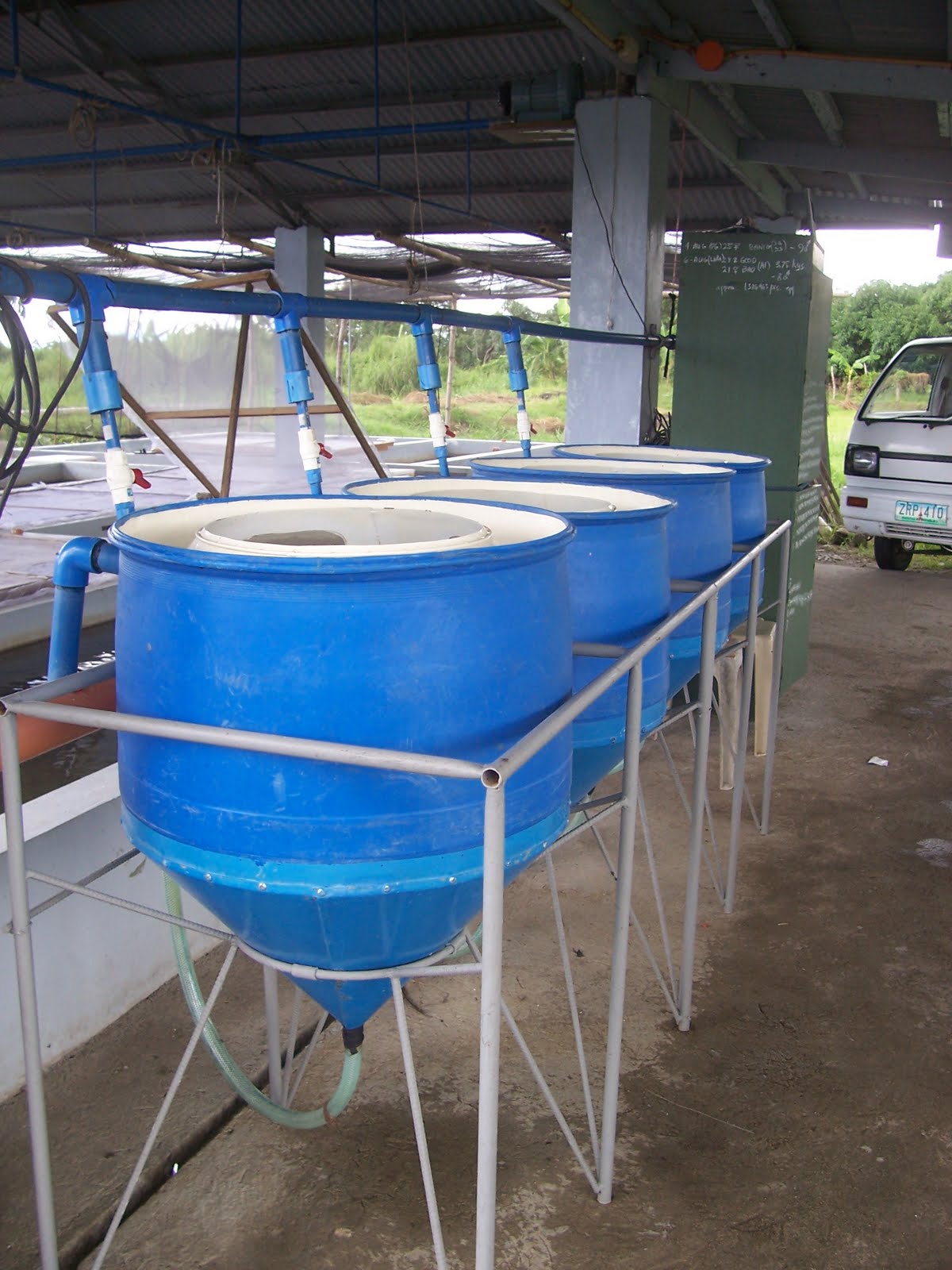
3) Conical Jars or Funnel Type incubators


07 September, 2010

01 September, 2010

Freshwater Fish Egg Incubators II

There are at least 3 types of fish incubators presently used in Philippine aquaculture namely:

1)      Bed type incubator- this is commonly used for the hatching of adhesive type fish eggs like the Asian and African Catfish and Pangasius. With the addition of a substrate for egg attachment like a bunched yarn,  “kakaban” or water lily roots, the same bed type incubator are used for the hatching of Common Carp, Japanese koi, and goldfish.

25 August, 2010

Freshwater Fish Egg Incubators (Part I)

J.P. Baldia

Efficient hatchery operations of either freshwater or marine fish species are the first step to a feasible aquaculture operation. Inadequate supply or unavailability of fish seeds for stocking the grow-out facilities will only make the aquaculture business non-viable.

Fish egg development and hatchlings are the most sensitive stages in the life cycle of a fish. It is therefore important that great care must be given to provide them with the best incubation and hatching conditions such as water quality, temperature and water flow to ensure their highest hatching rate and survival.

31 May, 2010

Intensive Culture of Tilapia in Tanks II. Hatchery & Nursery Operations


The business of raising Tilapia does not involve growing the fingerlings to marketable size alone. Another profit center in this enterprise that can even be more profitable is the hatchery and nursery operations. The higher profitability of these operations relies on the fact that the feed input is much less than the grow-out operations. Furthermore, in terms of the turn-over rates, the hatchery operations takes only about a week while the nursery operation takes about one month as compared to the four to five months it will take before the marketable sized fish is sold.

Similar to the grow-out culture, the hatchery and nursery of tilapia in tanks offers a solution to increased production at a limited space as compared to the traditional pond and cage culture systems. It also minimizes the risk of crop loss due to typhoons and inundation. Furthermore, intensification of culture means less exploitation of the area and more effective management and controlled operation. It is envisioned that it is only through the tank system that aquaculture can be “industrialized” by providing better control and predictable production levels.