

21 December, 2010


11 December, 2010
An Overview of Vietnam's Pangasius Industry
By: Froilan Emil Pamintuan
Philippine Commercial Attache to Vietnam
Note: Here is a presentation made by Froilan Pamintuan during the Pangasius Conference 2010 held at the Sun City Convention Center in General Santos City last December 2-3, 2010.
The rise of the Pangasius Industry in Vietnam has been very inspiring. The industry practically started only in early 2003 and has reached an export mark of 1 million tons of fish fillet in 2007.
Click here for the link
30 November, 2010
Opportunities and Limitations in Small Scale Marine Fish Culture (Pompano) in Cages and Ponds
Albert G. Gaitan
Researcher
SEAFDEC, Aquaculture Department
Tigbauan, Iloilo, Philippines
Here is another presentation at the FISHLINK 2010 held last September 20-22, 2010 at the Iloilo Grand Hotel in Iloilo City.
Please click here for the link: Pompano Culture
Researcher
SEAFDEC, Aquaculture Department
Tigbauan, Iloilo, Philippines
Here is another presentation at the FISHLINK 2010 held last September 20-22, 2010 at the Iloilo Grand Hotel in Iloilo City.
Please click here for the link: Pompano Culture
19 November, 2010
Today Show on MSN: "Could Your Seafood Contain Toxic Chemicals"
This is a very interesting video and article regarding the importation of seafoods to the US from Asia. The story ran on the NBC Today Show yesterday, November 18, 2010.
Note the emphasis that the Asian imports are robbing Americans of jobs (because so many Americans are employed raising tilapia and catfish?!), as well as causing terrible diseases in the U.S.
Here is the link.
*Thanks to a friend from the US for providing the link.
12 November, 2010
Some Notes on the Development of the Pangasius Industry in the in the Philippines
J.P. Baldia

Pangasius sold in General Santos market

Pangasius sold in General Santos market
Since 2007 when Pangasius fish, better known as “Cream Dory” or simply “Dory fish” fillet was re-launched as a food fish in the Philippines from Vietnam, its importation has been increasing by leaps and bounds. To date, it was reported that the Philippines imports some 600 to 800 MT of fish fillet of this fish equivalent to 60-80 containers per month and this volume keeps on increasing.
This indicates the increasing acceptability of this once unknown fish to the Filipino palate. Imported Pangasius fillet can now be found in almost all the frozen section of supermarkets in major cities in the country, in wet markets, in restaurants whether fast foods or fine dining, in the country’s major resorts such as Boracay and Puerto Galera and even as food served by airlines to its passengers during flight.
27 October, 2010
Mud Crab Culture
By Dr. Emilia Quinitio
SEAFDEC, AQD
Tigbauan, Iloilo

Here is another very interesting presentation at the recently concluded FISHLINK 2010.
Topics include: Nursery Culture of Mudcrab, Fattening and Production of Soft-Shelled Crabs. Here is the Link.
SEAFDEC, AQD
Tigbauan, Iloilo

Here is another very interesting presentation at the recently concluded FISHLINK 2010.
Topics include: Nursery Culture of Mudcrab, Fattening and Production of Soft-Shelled Crabs. Here is the Link.
19 October, 2010
Tilapia Culture in Freshwater Ponds and Cages: Advances in Fertilization and Feeding Practices
Ma Rowena R. Eguia (SEAFDEC, AQD-BFS) and
Ruel V. Eguia (CDO Foodsphere, Inc.
This paper was presented at Fishlink 2010, 20-22 Sept 2010 at the Iloilo Grand Hotel, Iloilo City
This is a very interesting article on reducing the cost of Tilapia culture in the Philippines. The reason why the Philippines is having difficulty in exporting our Tilapia produce is our production cost is higher as compared to our Asean counterparts. If our aim to be competitive or simply increase the profitability of Tilapia culture, reducing feed cost is surely one aspect that is worth considering. Here is the link.
12 October, 2010
Hot Weather And Poor Tilapia Egg Production II

The Tilapia Group discussion goes on with suggestions on how to overcome them in preparation for the future when abnormally high temperature occurs again. Here is the continuation....
05 October, 2010
Excel Based Finfish Diet Feed Formulator

Here are links to download the Excel based finfish diet feed formulator and the guide to operation. The download was obtained from the NACA (Network of Aquaculture Centers in Asia and the Pacific) website.
This tool is very important for fishfarm operators who are backyard in scale, or are located in areas where commercial feeds are not available. Formulating feeds using ingredients that are abundant in the locality can significantly reduce the cost to produce fish and therefore increase profitability.
27 September, 2010
Hot Weather And Poor Tilapia Egg Production

It is surprising that despite a major problem in Philippine aquaculture such as very low production of tilapia fry and fingerlings in the past months of March to July 2010, the people and government agencies involved in tilapia aquaculture have been silent about it.
Apparently, the El Nino effect has taken its toll on the tilapia industry. There was minimal production of fry and fingerlings during these times such that its effect is felt now. The price of table-sized tilapia has increased at a record-breaking high due to lack of supply. The situation can worsen and will be felt in the months ahead until November or December since fry/fingerling production normalized only sometime in August when it started to rain.
14 September, 2010

09 September, 2010

07 September, 2010


01 September, 2010
Freshwater Fish Egg Incubators II
There are at least 3 types of fish incubators presently used in Philippine aquaculture namely:

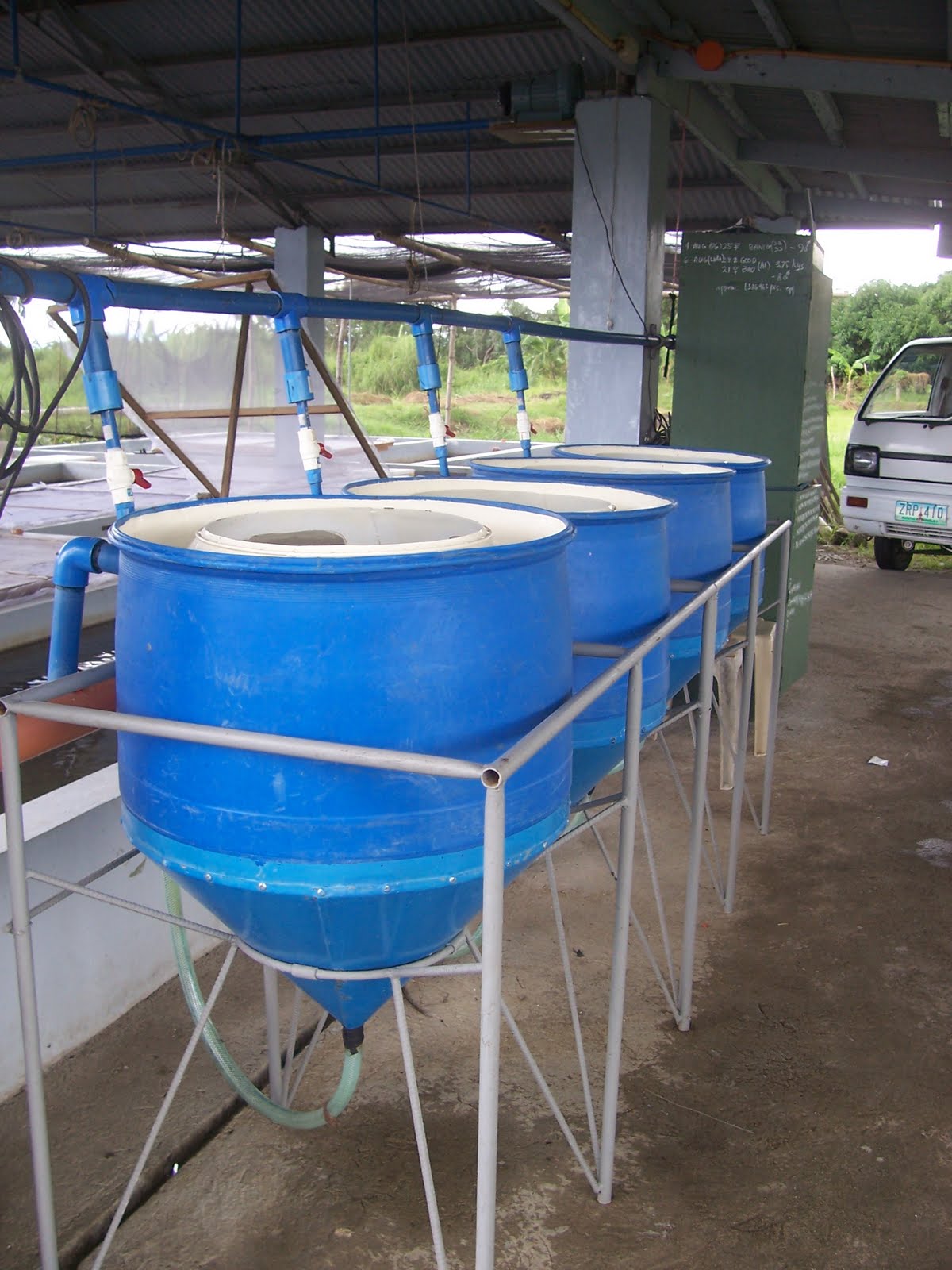
1) Bed type incubator- this is commonly used for the hatching of adhesive type fish eggs like the Asian and African Catfish and Pangasius. With the addition of a substrate for egg attachment like a bunched yarn, “kakaban” or water lily roots, the same bed type incubator are used for the hatching of Common Carp, Japanese koi, and goldfish.
25 August, 2010
Freshwater Fish Egg Incubators (Part I)
J.P. Baldia
Efficient hatchery operations of either freshwater or marine fish species are the first step to a feasible aquaculture operation. Inadequate supply or unavailability of fish seeds for stocking the grow-out facilities will only make the aquaculture business non-viable.
Fish egg development and hatchlings are the most sensitive stages in the life cycle of a fish. It is therefore important that great care must be given to provide them with the best incubation and hatching conditions such as water quality, temperature and water flow to ensure their highest hatching rate and survival.
18 August, 2010
Salinity Tolerance of Pangasius
Q. Can Pangasius be cultured in brackishwater?

09 August, 2010
Fishlink 2010 Invitation
The U.P. Aquaculture Society, Inc. (AQUASOC), is a non-stock, non-profit professional organization of the University of the Philippines alumni in fisheries and allied sciences based at the College of Fisheries and Ocean Sciences, UP Visayas, Miag-ao, Iloilo. UP AQUASOC have been conducting conferences, seminars and trainings that foster interaction and cooperation among academe, research, extension and production sectors to promote the development and application of sound and sustainable aquaculture technologies.
27 July, 2010
USDA Breeds Sterile Trout and Salmon for Aquaculture
Prologue
Here is another interesting news. While many Filipino scientists have been finding ways to propagate fish to increase its supply, the USDA developed ways to protect the environment by preventing reproduction in fish.
This could very well be adapted in the Philippines particularly for introduced species. It is indeed difficult to control the escape of introduced species in open waters just like the menace that the janitor fish brought to Laguna Lake. Lately, the Featherback Knife fish, another aquarium fish, has been part of the regular catch of fish in the Lake.
Perhaps it is time to seriously look at this new technology.
21 July, 2010
Massive Fishkill in Laguna Lake

(Photo from abs-cbnNEWS.com
After a long time, it was only last July 19,2010 right after typhoon Basyang did massive fishkill happened in Laguna Lake. Some 5,000 hectares of fishpen and fishcages were reportedly affected by this phenomenon.
Laguna Lake Development Authority (LLDA) chairman Ed Manda issued a statement saying, “fishkill happens every rainy season when the lake's oxygen level goes down due to pollution. The pollution is caused by wastewater and garbage thrown into the creeks and rivers that flow into Laguna Lake”.
My question is, if the lake is polluted why do low oxygen levels in the lake effecting fishkills happen only during the rainy season? Further, the strong wind brought about by typhoon Basyang should have brought turbulence to the water thus increasing the oxygen level in the lake. Obviously, this did not happen because LLDA said that low oxygen level caused the massive fishkill.
13 July, 2010
Here Come the Genetically Modified Fish
By Andrew Pollack

Prologue
I am posting here in toto an article that was published in the Manila Bulletin’s “The New York Times” last July 3, 2010 issue.
With the development of techniques for the genetic engineering of salmon, it will not be long before the genetically manipulated tilapia and perhaps other fishes will be seen in the markets. Remember that the procedure employed in the development of the GIFT tilapia was adapted from salmon.
Except for the fact that GMO’s are not considered organic, this is not viewed negatively. It only means that there will be fast growing fish species and increased production to fill in the protein requirement of the people.
Many may react negatively but keep in mind that up to now, no conclusive evidence have been found correlating the ill effects of GMOs to humans.-Philaquaculurist
Subscribe to:
Posts (Atom)